Master´s Thesis in collaboration with Scanias Interaction design department. You find it here!
Keywords - Interaction design, design thinking, complex interaction, digitalising, Heavy duty truck, Industrial design engineering, HMI.
Keywords - Interaction design, design thinking, complex interaction, digitalising, Heavy duty truck, Industrial design engineering, HMI.
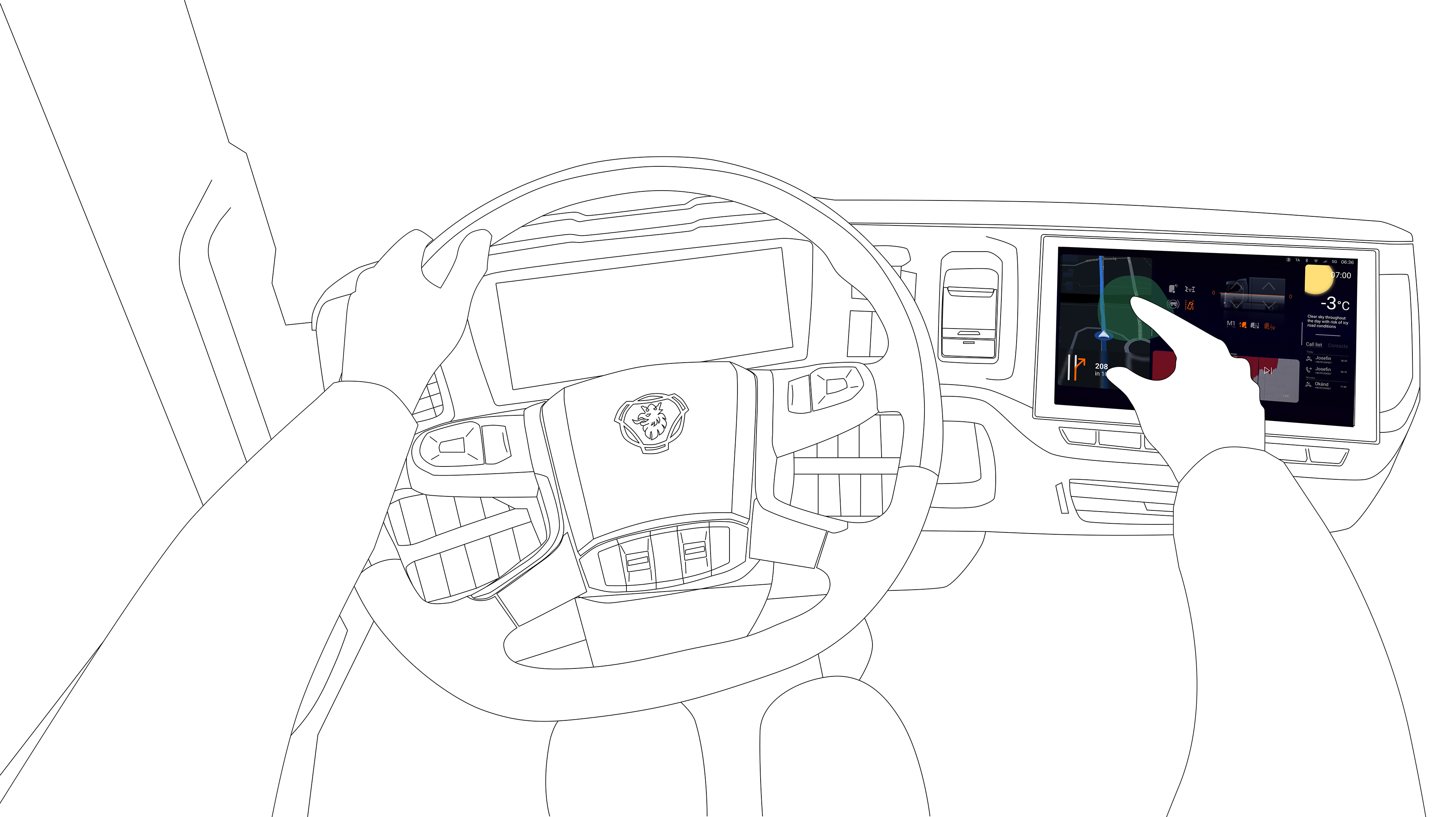
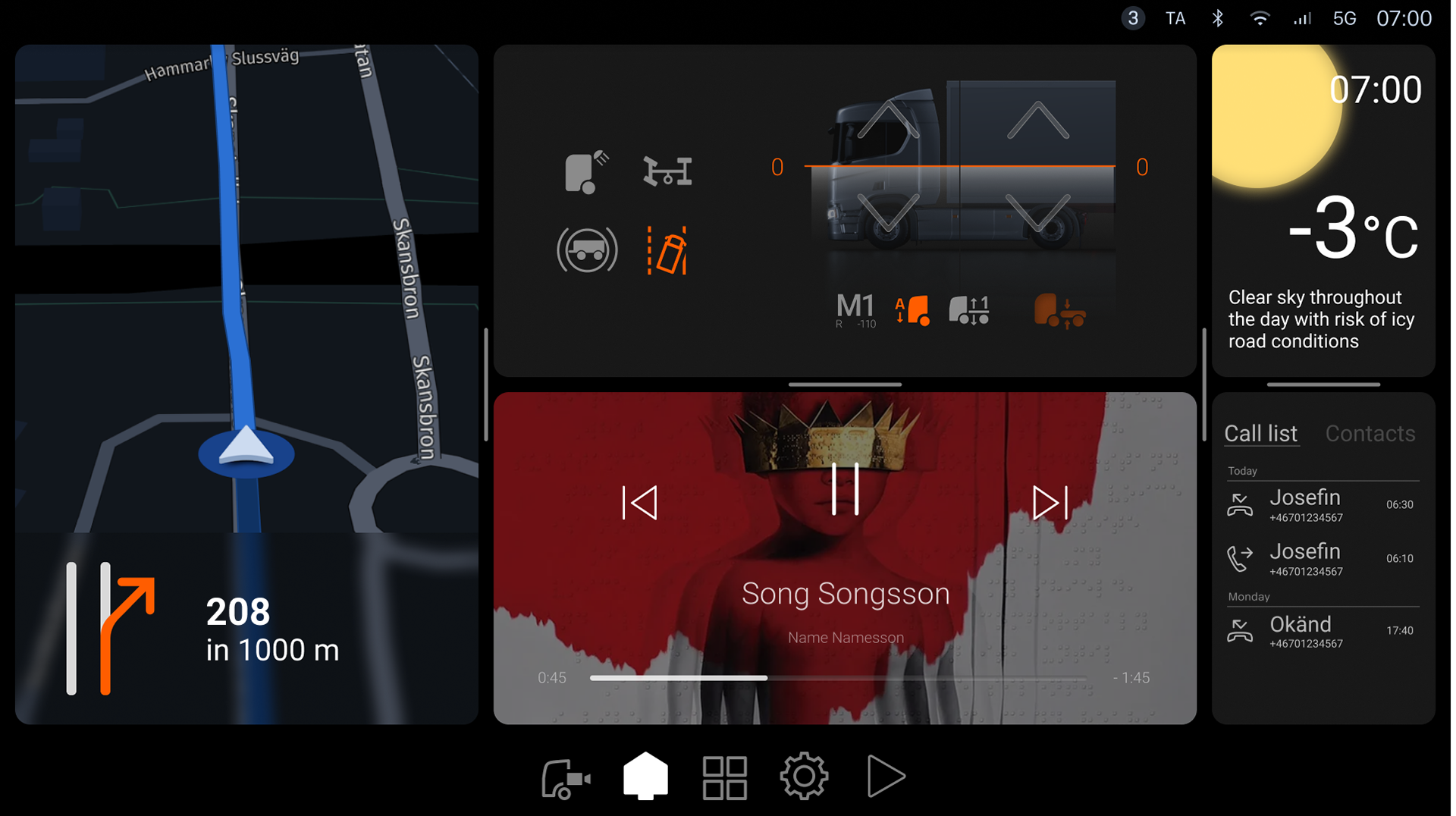
The digitalisation of the Automotive industry has led to the gradual replacement of traditional physical controls in truck cabins with touchscreens—a trend expected to continue for the foreseeable future. This shift presents both opportunities and challenges for truck drivers, particularly in terms of functionality development, usability, and safety. Since truck drivers operate in complex, demanding, and varied environments, it is crucial that interfaces are intuitive and minimise distractions.
The master's thesis examines how drivers interact with various truck functions in different situations and how a touchscreen-based interface can be designed to meet their needs in an increasingly digitalised industry where usability and safety are key factors. The study was conducted in collaboration with Scania and followed a design thinking-centered process, incorporating and iterating methods such as user observations, interviews, thematic analysis, benchmarking, workshops, concept prototyping, and user testing.
The master's thesis examines how drivers interact with various truck functions in different situations and how a touchscreen-based interface can be designed to meet their needs in an increasingly digitalised industry where usability and safety are key factors. The study was conducted in collaboration with Scania and followed a design thinking-centered process, incorporating and iterating methods such as user observations, interviews, thematic analysis, benchmarking, workshops, concept prototyping, and user testing.
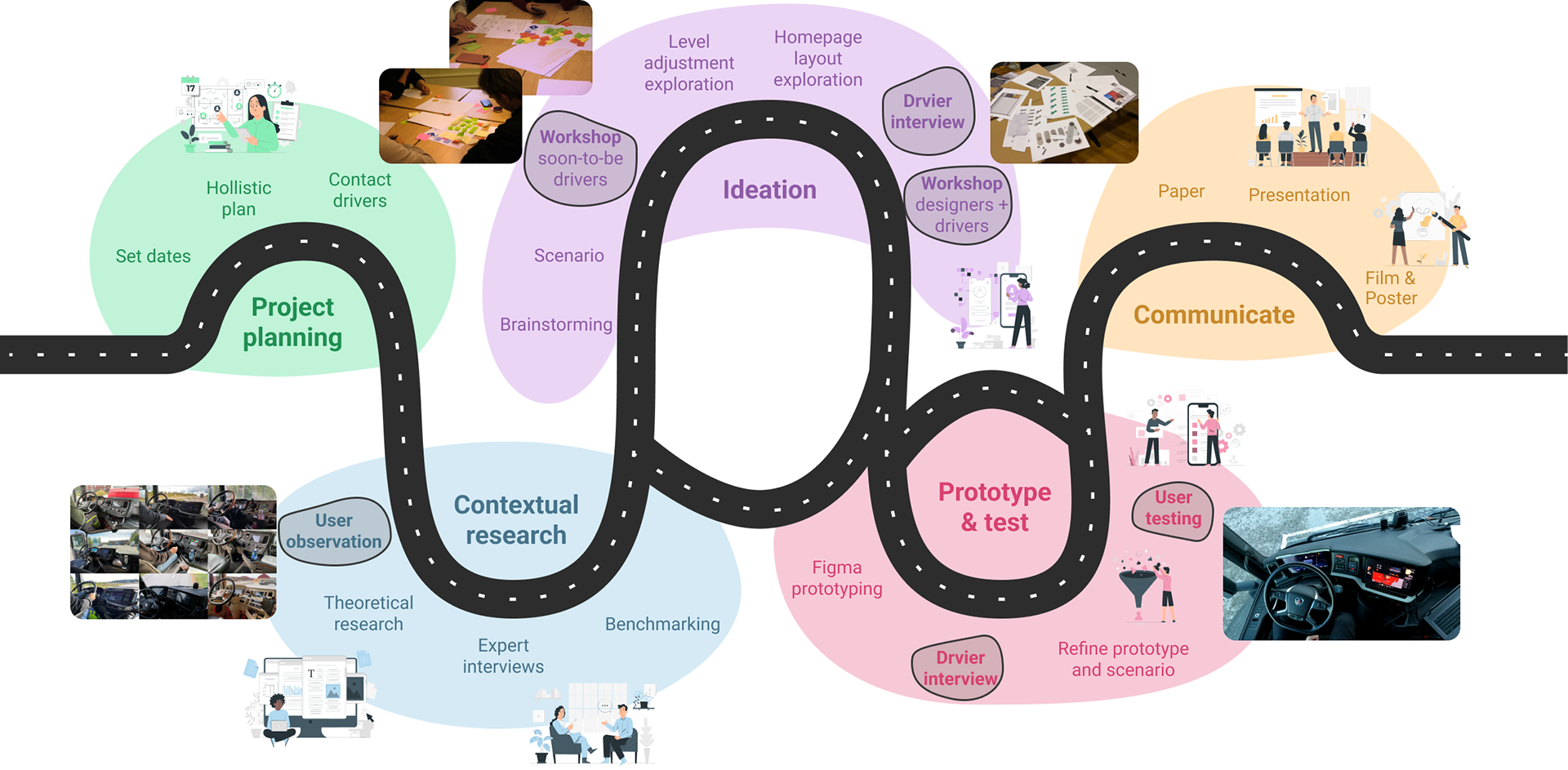
Roadmap of the project
Research Insights
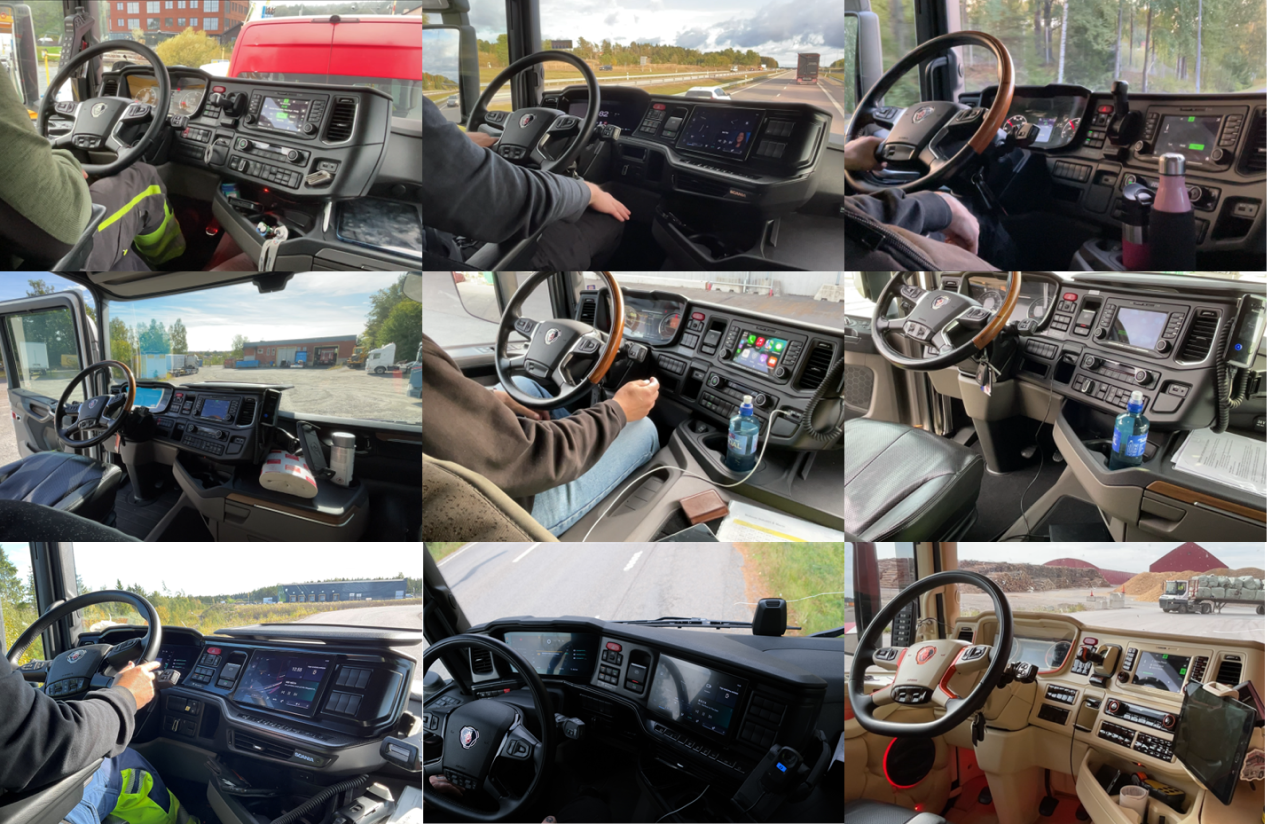
To understand how drivers interact with digital systems in real contexts, I conducted contextual research combining ride-along observations and informal interviews with ten truck drivers and expert sessions in interaction design and human factors. The observations provided insight into everyday practices and highlighted how digital needs differ between truck types and tasks—for instance, the relevance of functions like power take-off varies significantly between a timber truck and a tractor-trailer. Across all methods, clear patterns emerged: drivers need predictable interaction flows, adaptable interfaces that support different workflows, and quick access to essential functions within 1–2 steps. Environmental conditions such as vibration, lighting, and glove use further emphasized the importance of clear hierarchy and sufficiently large touch targets.
Ideation
During the Ideation phase I explored alternative menu structures, sketched layouts, built mid-fidelity prototypes and iteratively tested with drivers. Feedback guided refinements in hierarchy, gestures and screen clarity.
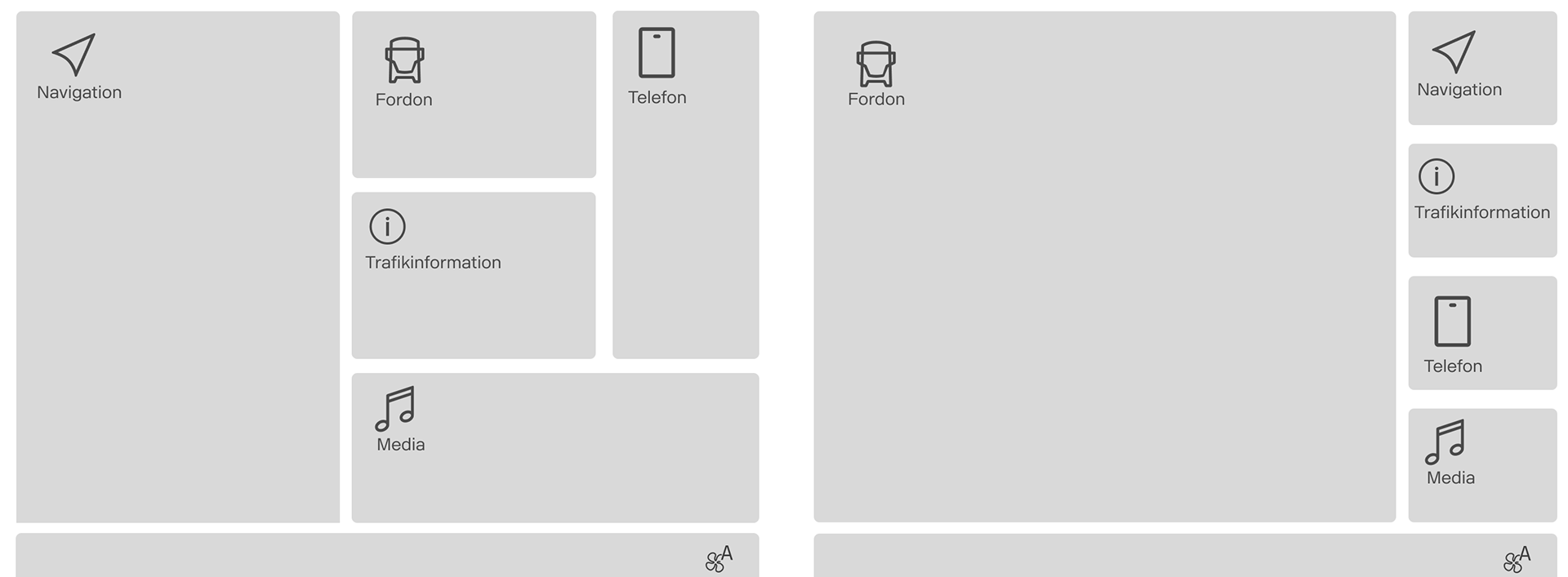
Early card-concept sketches
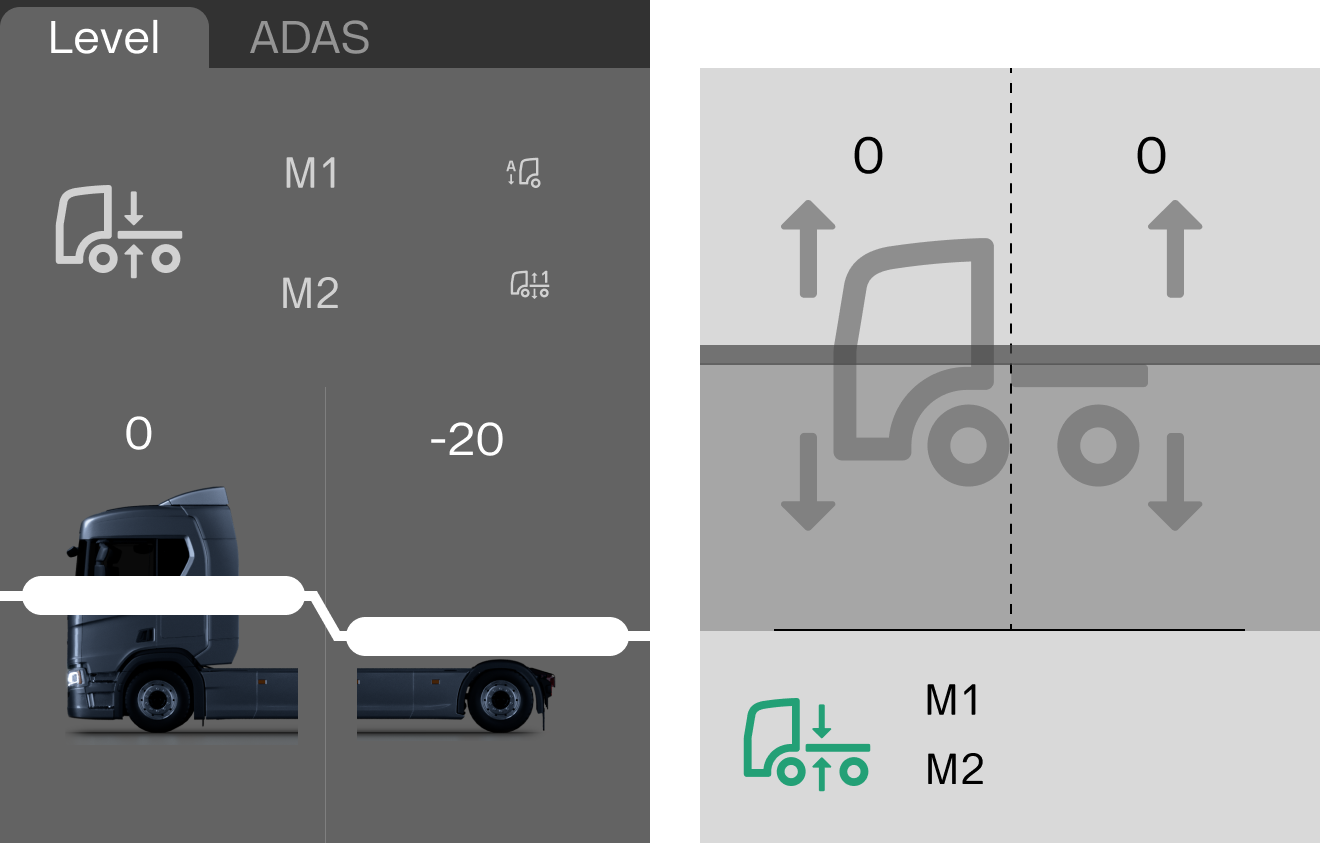
Early vehicle-card concept
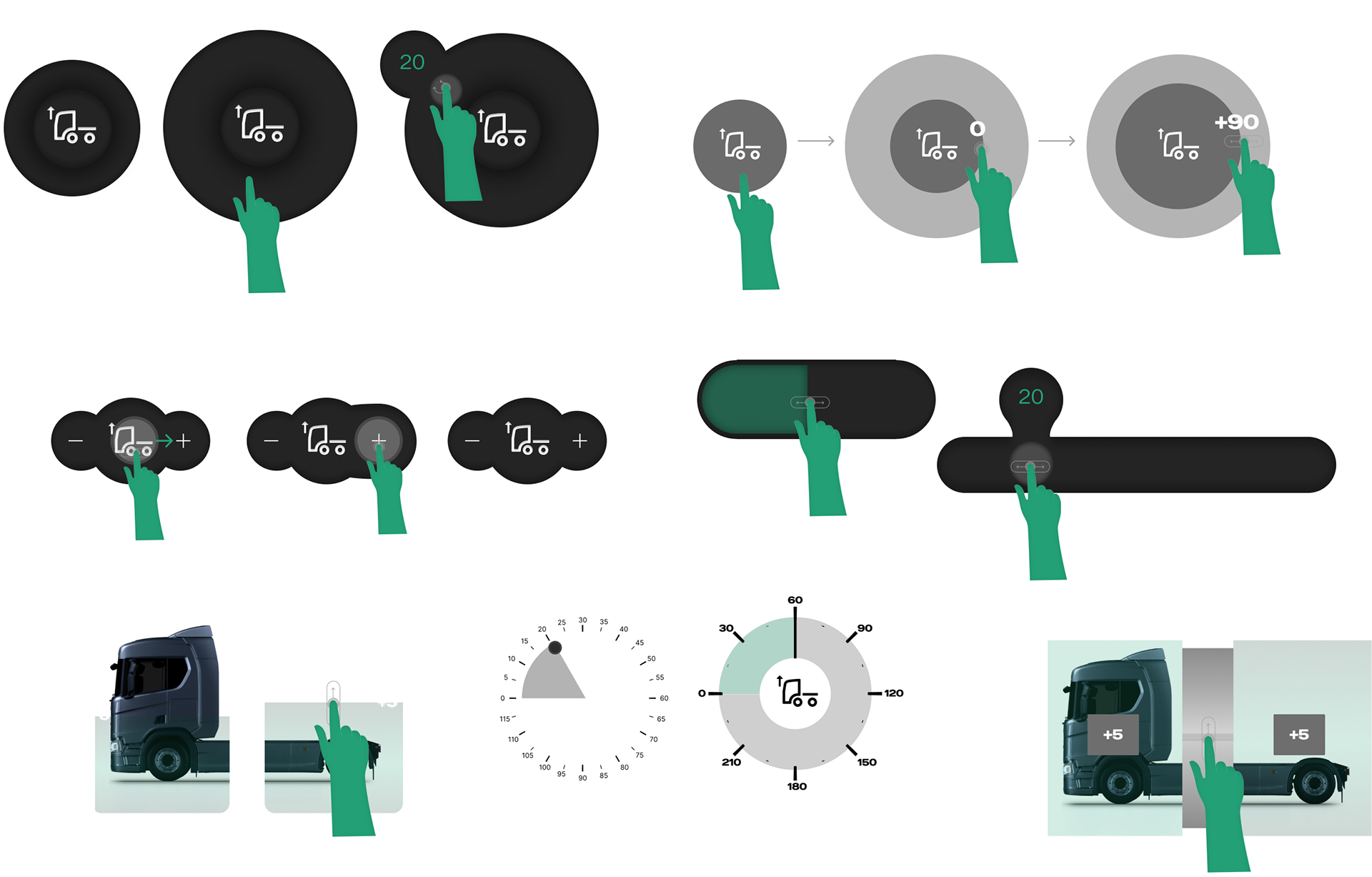
Exploration of different adjustment buttons
Final Concept
The final design introduces a clean, priority-based layout with consistent interaction patterns and streamlined flows. Accordning to the drivers who user-tested the layout this helps drivers complete common tasks faster and with fewer distractions.
Example of interaction and layout
The interactive Figma prototype below was created without plugins.
Click the image to explore it. If the prototype behaves unexpectedly, press R to restart.
Click the image to explore it. If the prototype behaves unexpectedly, press R to restart.